Survey 01
The Rottweiler: A Breed Guide
Two official standards describe this breed, and they do not fully agree. This survey separates what the standards write from what folklore repeats.

Two official standards describe the Rottweiler, and they do not say exactly the same thing. The federation that keeps the continental text publishes it as standard number 147 and measures in centimetres; the American registry describes the same breed in inches and prints no weight at all. A reader looking for one number walks away with two, and both are correct at home. This survey reads the two texts side by side, separates what each one actually writes from what folklore repeats about the breed, and keeps the argument attached to the documents rather than to memory. The point by point comparison, with the clause numbers named, is the work of the standards comparison; this page is the frame around it.
What the standards settle
A breed standard is a description for breeding and judging, and both texts use it that way. The continental text sets males between 61 and 68 centimetres at the withers and females between 56 and 63, attaches weights of about 50 kilograms and 42, and fixes the proportions in writing: height to length as 9 is to 10, depth of chest about half the height, skull to muzzle as 3 is to 2. The American text states the same skeleton in inches, 24 to 27 and 22 to 25 with the middle of the range preferred, and adds a dentition clause, a full complement of 42 teeth, with undershot and overshot bites among the faults. Both describe a black coat with clearly defined tan markings at the cheeks, the muzzle, the chest, the legs and the eyes, and both describe a temperament in the same vocabulary: calm, confident, courageous, with a wait and see attitude toward strangers and a willingness to work that the wording treats as part of the anatomy rather than as an accessory to it.
Where the two texts part ways
The differences are few and they matter to an American reader. The weight clause exists only in the continental text, which is why no page of this magazine prints a target weight in pounds. The tail is the louder divergence: the federation text describes the tail in its natural condition, while the American text describes the set as mattering more than the length and names both the docked and the natural one. This magazine shows natural tails in every photograph, because the reference text this region’s readers meet first is the one that keeps the tail as it grows. Neither text says anything about size in a living room, and neither one promises the dog in the photograph beside it.
What a standard never settles
A standard describes paper, not a promise. Nothing in either text is a health result about a particular dog, and the questions a household actually brings, how long the dog will stay sound, what its hips and heart are doing, what the breed measures and what it only watches, belong to the health survey and to the documents it rests on. The raw documents themselves, both standards, the registry requirements and the studies, are named and dated in the primary documents, so that any line on any page here can be held against its source.
Puppy or adult, the fork this site is built on
Most print about this breed is written for somebody choosing a puppy, and the decision this magazine writes for is the other one: the adult that arrives already grown, with the size visible and the temperament already formed. The case for that decision, and what it asks of a household, is made in before you get one and carried through in puppy or adult and adopting an adult dog. The rest of this survey serves that reader: the standard as a measuring stick rather than a shopping list, and the breed as it actually steps onto a Carolina porch.
The other doors of the magazine: Health, Adoption, Training, Law and Insurance and Notebook. Every one of them points back to the screening table.
In this section
3 pages, newest first.
-
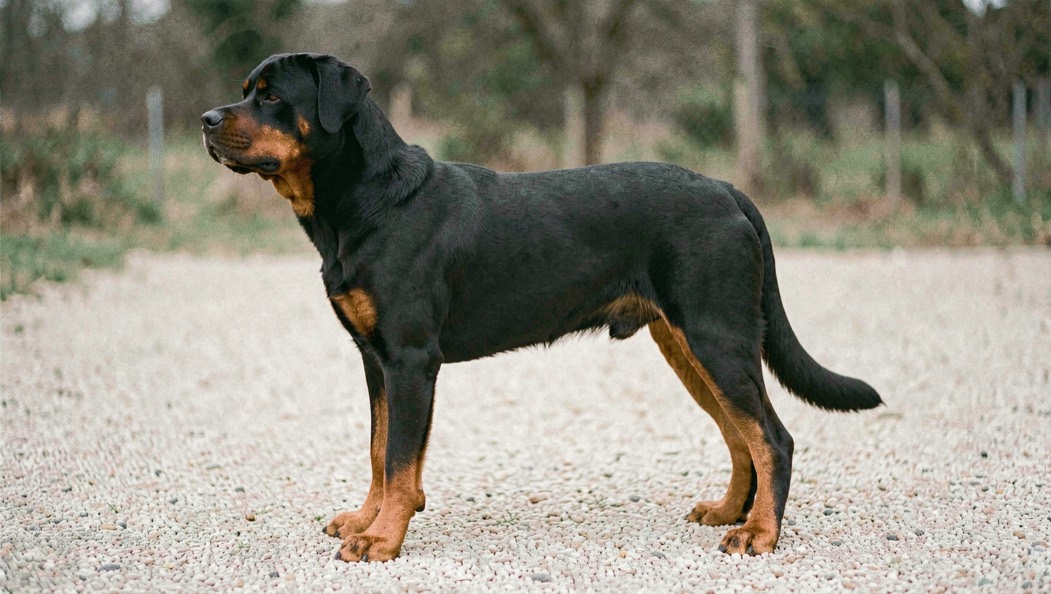
The BreedAugust 18, 2026
The two Rottweiler standards, point by point
Two official documents describe this breed, and on several points an owner reading both would meet two different dogs. Here is where they agree, where they part, and which text answers which question.
-

The BreedAugust 18, 2026
Before you get a Rottweiler
Six questions that settle themselves before the arrival, from the weight the standards describe to the insurance call that decides more than any trainer.
-
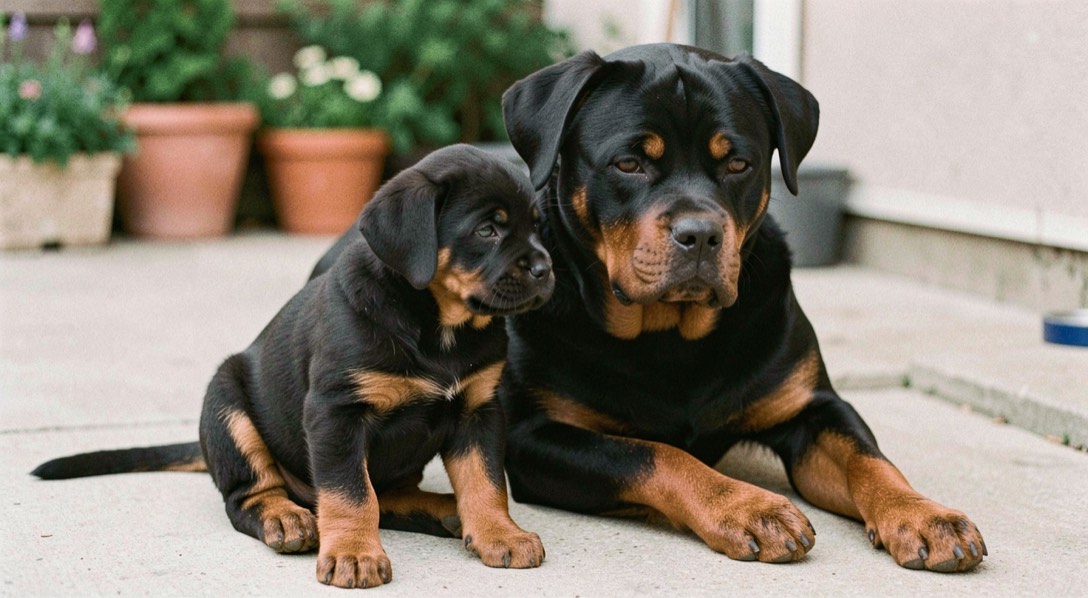
The BreedAugust 18, 2026
Puppy or adult: what each choice really asks
The two entrances into the breed, compared on what is knowable on day one rather than on sentiment: the unknown moves, it never disappears.