Reference · Adoption
The first thirty days
A printable chronology in three time blocks, resting on what research actually measures in a dog leaving a shelter, not on the three day rule that circulates without a source.
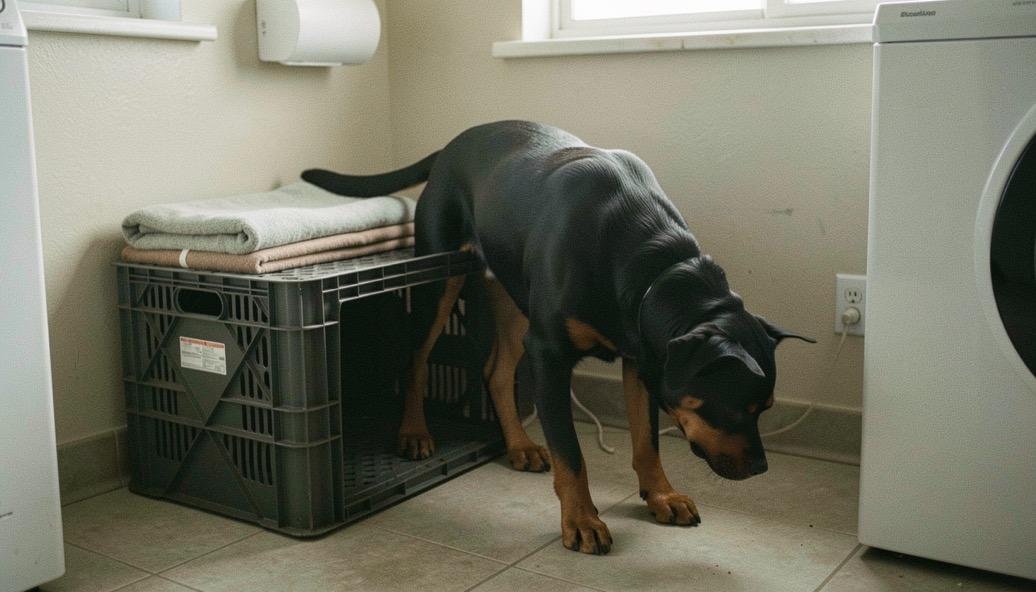
The first month with a grown Rottweiler is a schedule before it is a bonding experience, and the schedule is worth writing down before the dog is in the house. An adult arrives with habits nobody can document, a body whose history is partly unknown, and a nervous system that has just absorbed more change than most households can imagine. What the month asks of a household is not intensity but sequence: the quiet days first, the appointment inside the first week, the introductions after, and the widening of the dog’s world only as fast as the dog itself widens. The three blocks below are ordered that way, each item written as an action that can be checked off, and the whole page is built to be printed and stuck to a refrigerator door.
Day one: arrival, and the visits that do not happen
Day one has a single goal, and it is not socialization. The dog has left everything it could recognize, ridden in a vehicle, and walked into a building where every smell is new and every rule is unknown. The block below is short on purpose, and the visits that do not happen on day one are the point of most of it.
| Done | Day one |
|---|---|
| ☐ | Set one room up as the dog’s before the arrival: water down, a bed in a corner with a wall on two sides, the door closed to the rest of the house. |
| ☐ | Let the dog walk in on its own feet rather than being led, and let it choose where to settle inside that room. |
| ☐ | Keep the household flat: ordinary voices, ordinary movements, no gathering of visitors and no tour of the house. |
| ☐ | Write down what arrived with the dog: the microchip number if the papers name one, the food it has been eating, the words it answers to, and the name of whoever handed it over. |
| ☐ | Photograph the paperwork in the folder, because the original has a way of staying in a car. |
| ☐ | Decide, before bedtime, which two people handle which tasks for the first week, so the dog meets a pattern rather than a committee. |
Nothing on that list trains anything, and that is the design. Day one is spent earning the reading of the next thirty days, and the reading starts with a dog that has been given a place to stop moving.
Days two to seven: routine, first veterinary appointment, records
The first week adds three things, in this order: a routine that repeats at the same hours, the first veterinary appointment, and the start of the file the household will keep for the rest of the dog’s life. The appointment belongs inside the first week even when the dog looks well, because it is the visit where the inherited records are read by a professional and the examinations an adult can still take are put on a calendar. The breed’s panel, and the age at which each of its results becomes final, is laid out in the screening table, and the appointment goes better when the household arrives having read which of those exams the dog has never had.
| Done | Days two to seven |
|---|---|
| ☐ | Fix the skeleton of the day: same door for outings, same hours for meals, same end to the evening, however informal the middle of it stays. |
| ☐ | Book the veterinary appointment and bring everything: whatever records travelled with the dog, the photographs of them, and the list of what the previous keeper said and did not say. |
| ☐ | Ask at that appointment which examinations from the panel the dog is missing, and put dates on the ones worth ordering now rather than later. |
| ☐ | Confirm vaccination status in that same conversation, including rabies, which North Carolina requires of dogs; the current details belong to the veterinarian rather than to a page. |
| ☐ | Start the file as a habit rather than a project: one folder, dated, with the appointment summary written the same day it happens. |
| ☐ | Walk the same short route once or twice a day rather than ranging widely, and let the dog sniff: the route is information, not exercise. |
| ☐ | Begin the observation log. Three lines a night is enough, and the vocabulary it needs is the one in body language of fear. |
The log is the part households skip and miss most. A grown dog shows its habits in patterns rather than in incidents, and a pattern is invisible on any single day. What gets written on day four is what makes week three legible.
Weeks two to four: introductions, walks, first assessment
By the second week the dog has a map of the house and a shape to its days, and the month’s remaining work is widening that map on purpose: more of the house, more of the neighborhood, the resident animals, and the outside world, in that order. The block below is where the household’s discipline matters most, because everything is going well by now and nothing looks like it needs a rule.
| Done | Weeks two to four |
|---|---|
| ☐ | Open the rest of the house a room at a time, with the dog deciding when to enter and when to leave, and keep the first room available all along. |
| ☐ | Introduce resident animals separately, briefly, and with an exit planned for both sides; a week of short meetings outlasts an afternoon of full ones. |
| ☐ | Lengthen the walks by time rather than by ambition, and add one new street or surface at a time so the dog can file what changed. |
| ☐ | Practice handling that a veterinarian will need: ears, paws, a hand along the back, a brief hold of the collar, each one short and ended by choice. |
| ☐ | Teach the household’s two or three house words in the kitchen rather than in a class, on a dog that already knows words from its previous life. |
| ☐ | At about the third week, write the first assessment: what the dog does with a stranger at the door, with another dog behind a fence, alone for twenty minutes, and on a wet floor. |
| ☐ | Compare that assessment with the log rather than with the first afternoon. The dog that was not there at first shows up in week three, and the difference is information rather than a surprise. |
The third week assessment is the hinge of the month. What it produces is not a verdict on the dog but a description of the dog, written while the household can still tell which of its own habits shaped which of the dog’s.
What the research actually measured
The chronology above rests on a small number of measurements rather than on refuge folklore. A study published in 2019, across five American shelters, measured what changes for a shelter dog given one or two nights in a foster home, and it measured four things specifically: urinary cortisol, resting pulse, the longest single stretch of uninterrupted rest, and the proportion of time spent resting. The finding that matters here is the last two. Every dog at every site recorded its longest uninterrupted rest of the whole study period during that short stay in a home, which is a measured statement about what a quiet room and a predictable night do for a dog that has just lost everything familiar.
The same study is the reason this checklist starts with sleep rather than with training. Rest is the first thing to come back and the easiest thing to measure at home, because a household can see the length of the night, the depth of the settling, and the number of times a dog wakes to check the door. Those are not metaphors; they are the same variables the study instrumented, observed without instruments. The page that reads the same month from the other side of the handover, where the observations are recorded for the next household rather than for this one, is fostering an adult.
The rule that circulates without a source
Any search for an arrival schedule meets a numbered rule almost immediately: three days to decompress, three weeks to learn a routine, three months to feel at home. It circulates with the confidence of a formula and without a source, and this page keeps it out of its blocks for two reasons. The first is that no study produces it. The measured literature describes rest returning and stress falling, both on curves that vary by dog, and a curve is not a countdown. The second is what the rule does to a household that believes it. A dog still startled in week five reads as behind schedule; a dog settled in four days reads as finished. Both readings are wrong in the same direction, because both replace observation with a clock.
Why the numbered rule survives, and what to use instead
- It is short enough to remember and it promises a finish line, which is exactly what an anxious household wants in the first week.
- The measured version is less satisfying: rest comes back first, behavior follows on its own calendar, and neither arrives on a date anybody can promise.
- The working substitute is the log. Three lines a night converts the month from a countdown into a record, and the record is what settles the question the rule pretends to answer.
- Nothing in the measured literature gives a date by which a dog should be past its fears. A household that wants a date has a veterinarian and, where there is one, a placement structure to ask.
When to call someone
The month has three parties worth calling, and knowing which one to call is most of the skill. The veterinarian is the call for anything the body does: a dog that will not drink, that cannot settle in any spot it is offered, that shows the physical signs the observation log has been catching, or that arrives at the first appointment with a question the inherited records raise. Moving an appointment earlier is cheap, and the log is what makes the move persuasive, because a week of dated lines reads differently from an anxious afternoon. The placement structure, where there is one, is the call for everything the contract and the records hold: what the fee covered, what the return clause says, what the file promises about the dog’s history, and what happens to the dog if the placement does not hold. That call is easier in week one than in month six.
The third call is the one to skip: the neighbor, the forum and the relative who raised a different dog in a different decade. The framework this checklist implements, the reading of an adult’s first month as observation rather than as a test the dog is passing or failing, is laid out fully in adopting an adult dog. What comes after the month, the handling of a large animal in ordinary rooms and the routine that carries the next year, is the work of training and behavior. The contract words and registry terms the month throws at a new household, from return clause to permanent identification, are defined in glossary of terms.