Law and Insurance
Homeowners insurance and breed restrictions
The regime that never reads the statute book first: what an insurer weighs, what a lease adds on top, and the four questions worth asking in writing before a dog arrives.
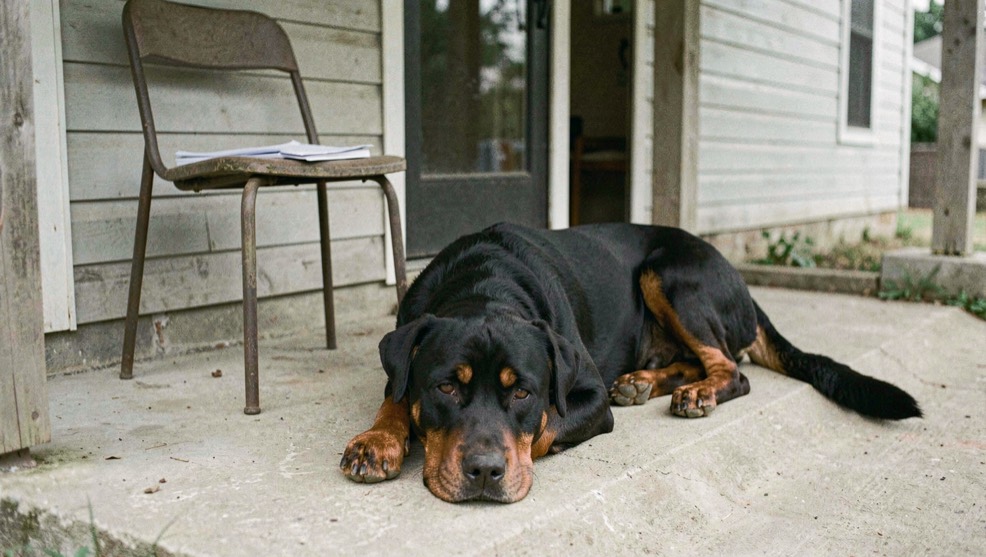
Ask whether a Rottweiler is legal in North Carolina and the law gives a narrower answer than the question expects: the state legislates about dogs rather than about breeds, and its dangerous dog procedure judges one animal at a time. Ask the same question of an insurance company and the answer comes back from a different world. An insurer is underwriting a household against a book of claims, under rules it writes for itself, and it is free to answer a breed question the law never asks. The two regimes share a household without consulting each other, and a good share of the trouble people have with this breed in this state begins in the gap between them. This page is about that gap: how the lists are written, what a policy can exclude, what sits above it, what a lease adds, and the questions worth having in writing before the dog is in the yard.
Two regimes that do not talk to each other
The state regime is the one described in the dangerous dog procedure: no statewide law restricts breeds by name, and chapter 67 attaches its consequences to a designation, one animal at a time, with the strict civil liability of G.S. 67-4.4 at the end of it. The private regime is a contract. A policy is underwritten, priced and worded by a company answering a business question, and nothing in the state’s silence about breeds obliges a carrier to stay silent about them. The consequence is worth stating plainly, because it is the fact people find hardest to hold: a household can hold a clean file with the state and a refusal from a carrier in the same week, and neither answer contradicts the other. Legality settles what the state will do. It settles nothing about what a company will write, and a carrier’s list settles nothing about what the law is.
How a restricted breed list is written
The lists have authors, and the authors are underwriters. A restricted breed list is a set of underwriting judgments a company has accumulated across the claims it has paid, informed by national accounting such as the Insurance Information Institute’s annual figures on dog bite liability claims, and applied through wording the company chose for itself. That wording is the part worth noticing. One company names the breed outright. Another describes a dog by its share of the breed, another by appearance, another in terms broad enough that the reader has to ask. Lists differ from carrier to carrier, and they change without a public announcement, because a list is a business decision rather than a finding. Which is why the question is asked of your own carrier, in writing, instead of looked up on a forum: the list that governs a household is the one inside its own contract, in the company’s own terms, and every list pasted anywhere else is somebody else’s situation.
Liability, exclusion and the umbrella policy
Three contract words carry most of the weight in this subject, and each one is worth understanding before a signature rather than after a claim. Liability coverage is the part of a policy that answers for damage. An exclusion is language that carves something out of that answer, and an exclusion aimed at a dog can remove exactly the claim a household believed it was buying. The umbrella policy is a separate contract that rides above the base one, with its own limits, its own premium and its own underwriting, which means it can carry its own list. The expensive surprises in this subject live at the seams between those layers: damage excluded on one layer and assumed on another, a list on the umbrella that differs from the list on the base policy, an answer given about one dog that was in fact an answer about a breed. The three terms, with the rest of the vocabulary a household is handed, are defined in the glossary.
The states that have legislated against it
A handful of states have decided that a contract may refuse a household on the breed of its dog alone only within limits, and the drafting is the interesting part. Minnesota’s statute, 65A.303, is one such text: worth reading less for its contents than for what it shows a legislature doing when it steps into an underwriting question and puts a wall around one answer. The rest of that picture moves. States add provisions, amend them and let them sit, and any list of such states circulating online is a lead to be checked rather than a fact to plan around. The habit is the same one the statutes themselves teach: read the current law of your own state, in its own code, before building anything on a summary, because the summary was true for someone else last year.
Leases and HOA covenants
A third layer of rules sits under the other two, private and older than either. A lease can restrict the animal regardless of what the state says and regardless of what the carrier answers, and covenants recorded against a property can do the same to every household in a development. Both bind by agreement, both live in writing, and both are found in the documents a household signs or inherits rather than in any statute. For a household that rents, the lease question is settled before the application goes anywhere, because it is one of the first things an application asks about, and the homework that surrounds it belongs to before you get one. For a household that buys into a development, the covenants travel with the property, and they are read once, carefully, rather than discovered at the closing table.
The four questions to ask before you sign
The whole subject compresses into four questions, and they work best asked in writing, of the carrier that will actually carry the policy:
- Is this breed, or a dog described as partly this breed, on the restricted list of the policy being quoted, in the wording the company itself uses?
- Is there an exclusion written into the policy for damage this dog causes, and what exactly does that exclusion carve out?
- If an umbrella policy is part of the plan, does it carry its own list, and does its answer differ from the base policy’s?
- What would change in this contract if the dog were designated under the state’s dangerous dog procedure, with the strict liability of G.S. 67-4.4 attached to the household?
A refusal deserves its own handling. Get it in writing, ask what would change the answer, and quote more than one carrier, because the lists differ and the difference is sometimes the whole question. Then read the refusal for what it is: an underwriting answer from one company on one day, not a determination about the dog in the yard and not a finding about the breed. The rules a household lives under arrive from three directions at once, and holding them apart is most of the work.
| Who writes the rule | What they can refuse or add | What limits them |
|---|---|---|
| The state legislature | Criminal charges and civil liability attached to one designated animal | Its own text: chapter 67 writes about dogs, not about breeds |
| The municipality | Ordinances adopted for its own territory, and some North Carolina municipalities have adopted breed specific provisions | The city’s own published code, which is where the text is read before any summary is trusted |
| The insurer | The list, the exclusions, the premium, and the refusal itself | Its own underwriting rules, and in a few states a statute like Minnesota’s 65A.303 |
| The landlord or the HOA | Lease clauses and covenants recorded against the property | The documents themselves, and the state law that sits above them |
Misreadings at the kitchen table
- A breed no law of the state restricts can still be restricted by a contract. The two answers coexist, and neither cancels the other.
- A restricted breed list is an underwriting document. It is not a determination about your dog, and it is not a legal finding about the breed.
- The umbrella policy is a separate contract with its own underwriting. An answer at the base layer settles nothing about the layer above it.
- A refusal is one company’s answer on one day. It does not bind the next carrier, and it does not follow the household to a new address without being asked again.
- Strict liability under G.S. 67-4.4 attaches to a designated dog. It is not the default rule for every dog in the state.
Everything on this page reduces to one habit: the answers that matter are obtained in writing before the dog arrives, from the carrier that will carry the policy, in the words it uses itself. The state’s side of that conversation is North Carolina dog law, and a move to a new address reopens the whole question at once in across state lines.